The OPOL Method: One Parent, One Language — Does It Actually Work?
What is OPOL (one parent, one language)? What research says, how many hours of minority language input kids need, and 5 common OPOL problems solved.
Gizella Nagyne Palinkas
4/20/20267 min read
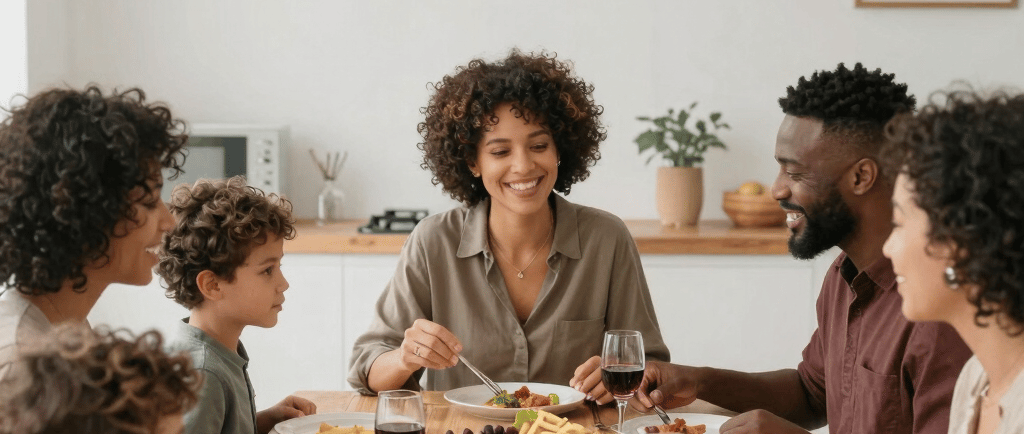

If you're raising a child in a multilingual household, you've probably heard of OPOL — the One Parent, One Language approach. It sounds elegantly simple: each parent consistently speaks their own native language to the child. But does it hold up in the messy, exhausting, real-world context of family life? Here's what the research actually says — and what families who've tried it have learned.
What Is OPOL — and Where Did It Come From?
The One Parent, One Language principle was first articulated by French linguist Maurice Grammont in 1902. In a letter to a bilingual colleague, he suggested a deceptively simple rule: each parent should speak their own language to the child consistently, without mixing. The child, he argued, would naturally sort out the two systems over time.
More than a century later, OPOL remains the most widely recommended strategy for raising bilingual children in mixed-language households. The logic is intuitive: by associating each language with a specific person, children receive consistent, predictable input that helps their brains build two separate linguistic systems rather than one muddled hybrid.
In our family, we tried this from the very beginning — one of us speaking English, the other Italian. In theory, it was clean. In practice, it required constant, conscious effort, especially in social situations where switching languages mid-sentence felt like a small act of rebellion against the room.
But here's what the science says: when done consistently, OPOL is one of the most effective methods for raising bilingual children. The emphasis, as we'll explore, is firmly on consistently.
The Research: Does OPOL Actually Work?
Annick De Houwer's landmark 2007 study, published in the International Journal of Bilingualism, analyzed language input patterns across hundreds of bilingual families. She found that children raised under consistent OPOL were significantly more likely to develop active use of both languages — not just passive understanding — compared to children in homes with inconsistent language strategies.
Suzanne Barron-Hauwaert's 2004 research, drawn from interviews with over 150 OPOL families across Europe and North America, painted a more nuanced picture. Families who maintained OPOL strictly reported high rates of functional bilingualism in their children by school age. But "strictly" was the operative word — and fewer families managed it than expected.
Francois Grosjean's work on bilingualism reminds us that bilingual children are not simply two monolinguals in one body. They develop a unique linguistic profile that is influenced by context, emotion, social pressure, and the sheer volume of input they receive. OPOL works by engineering favorable conditions for both languages — but those conditions require maintenance.
The chart above illustrates a key finding from the literature: passive exposure alone — background TV, occasional media — delivers only a fraction of the input children need. OPOL, when consistently practiced, is one of the most efficient routes to reaching the 15+ hours per week threshold that researchers associate with meaningful bilingual development.
74% of OPOL families who maintained the approach consistently report that their child achieved conversational fluency in the minority language — compared to fewer than 30% of families who used a less structured approach.
The Critical Factor: Minority Language Exposure Hours
Perhaps the most important finding from bilingual acquisition research is this: it is not the method itself that determines success — it is the volume and quality of minority language input. In households where the majority language dominates school, media, peer groups, and community life, the minority language parent has to work harder to compensate.
Ellen Bialystok's research on bilingual cognitive benefits shows that children who receive robust dual-language input develop measurably stronger executive function — better attention control, task switching, and working memory — compared to monolingual peers. But these benefits correlate with genuine bilingual use, not just exposure. OPOL creates the framework; it still needs fuel.
The data is striking. Families who maintained OPOL with very high consistency — speaking the minority language more than 75% of the time when alone with the child — saw 84% of children achieve conversational bilingualism by age 6. That figure drops sharply as consistency falls. Below 25% consistency, fewer than one in four children achieve active bilingualism.
5 Common OPOL Challenges (and How to Handle Them)
Every family we've spoken to who has attempted OPOL has hit at least one of these walls. They're normal. They're also navigable.
1
Language Mixing and Code-Switching
It can feel alarming when your child starts mixing languages mid-sentence — saying something like "Voglio the blue one" or "Can we aller au parc?" But code-switching is developmentally normal and is not a sign of confusion. Bilingual children code-switch strategically, often because one language offers a word or phrase they find more natural in the moment. Research consistently shows that code-switching is a sophisticated linguistic skill, not a deficit. The appropriate response is not correction but gentle modeling: repeat what they said using the target language naturally, without drawing attention to the switch. Over time, as both languages strengthen, mixing typically decreases.
2
Child Refuses to Speak the Minority Language
Around ages 3–5, many children go through a phase of language refusal — they understand the minority language perfectly but simply refuse to speak it, defaulting to the majority language because it is easier, or because their peers use it. This is one of the most demoralizing experiences for minority-language parents. Experts recommend staying consistent — continue speaking your language even when the child responds in the majority language. Avoid turning it into a power struggle. Instead, make the minority language feel desirable: frame it as a secret code, tie it to exciting experiences, or introduce peers who speak it. The passive phase often resolves when children find social motivation.
3
Partner Does Not Speak the Minority Language
In most OPOL households, one parent is the sole fluent speaker of the minority language. This creates an inherent imbalance: the majority-language parent may feel excluded during one-on-one conversations between the minority-language parent and child. This can generate subtle — or not so subtle — pressure to switch. Open communication between partners is essential. Many families find success in establishing agreed-upon "minority language times" — certain meals, bedtimes, or car rides — that are protected from majority-language pressure. The non-speaking partner can also actively signal encouragement: "Tell Dad what you said to me in Italian" goes a long way.
4
Social Situations Feel Awkward or Exclusionary
Speaking a different language to your child at a playground, a birthday party, or a family gathering can draw stares, well-meaning but uncomfortable questions, and occasional criticism. Some parents feel they are being rude by speaking a language others cannot follow. This is a real social cost of OPOL, and it is worth acknowledging rather than minimizing. Many families develop a pragmatic rule: in large group settings, they switch to the majority language for group conversation, but maintain the minority language in direct parent-child exchanges. This compromise reduces social friction while preserving the core OPOL relationship.
5
Parent Fatigue and Burnout
Perhaps the most underacknowledged challenge: the sheer exhaustion of never switching off. For many minority-language parents, speaking their native language feels natural — but for non-native speakers, or for parents whose minority language is also used professionally, maintaining the linguistic boundary through illness, stress, school holidays, and every other demand of parenting is genuinely draining. There is no shame in acknowledging this. Building in structured "off days" — rather than inconsistent drift — can protect the overall approach. The goal is sustainable consistency, not perfection. A parent who holds OPOL 85% of the time for ten years will achieve far more than one who burns out entirely by age three.
How to Boost Minority Language Input
OPOL alone may not be enough, particularly if the minority language has little presence outside the home. Here are strategies that research and family experience both support.
👨👩👧👦
Minority Language Playgroups
Nothing motivates a child to use a language like peers who speak it. Seek out language playgroups, cultural organizations, or community groups where your child can interact socially in the minority language. Even biweekly contact with other children can dramatically shift a child's attitude toward the language.
✈️
Travel and Extended Family
Time spent in a country or region where the minority language is dominant — even short trips — provides immersive exposure that is qualitatively different from home input. Grandparents and extended family who speak only the minority language are among the most powerful motivators for children to maintain their skills.
📺
Media in the Minority Language
Books, audiobooks, films, podcasts, and music in the minority language all contribute to passive exposure that reinforces what direct conversation builds. While media alone is not sufficient for acquisition, it significantly extends the hours of input a child receives — and makes the language feel alive and relevant.
📚
Minority Language Books at Bedtime
Bedtime reading is one of the most emotionally charged and language-rich interactions in a child's day. Committing to reading exclusively in the minority language at bedtime creates a reliable, cherished daily ritual that accumulates to thousands of hours of high-quality input over childhood.
🎓
Heritage Language School
Weekend or after-school heritage language programs give children structured literacy instruction in the minority language — critical for long-term maintenance. Many immigrant and expatriate communities run these programs, which also provide peer connection and cultural identity alongside language skills.
👴
Grandparent and Caregiver Input
If grandparents or other regular caregivers speak the minority language, encourage them to use it exclusively with the child. Research consistently identifies grandparent input as one of the strongest predictors of minority language maintenance, because the emotional bond creates powerful motivation to communicate.
When OPOL Works Best — and When to Consider Alternatives
OPOL is most effective under a specific set of conditions: when the minority-language parent is a fluent or native speaker, when the child has meaningful exposure to the minority language beyond just one parent, when both partners are actively supportive of the approach, and when the family can sustain the commitment over years rather than months.
It works particularly well in internationally mobile families, in households with regular grandparent involvement, and in communities with heritage language resources. When a child spends time in two different linguistic environments — school in the majority language, home partly in the minority — OPOL creates a reliable anchor that prevents the minority language from being crowded out entirely.
But OPOL is not the only path. If the approach is generating significant family stress, causing a child to associate one parent with linguistic obligation rather than warmth, or simply proving unsustainable, there are legitimate and research-supported alternatives worth considering.
Minority Language at Home (mL@H) is an approach in which the entire household uses the minority language as the primary home language, regardless of who is speaking. This works especially well when one parent is a non-native speaker but is willing to learn alongside the child. It concentrates minority language input in a protected domestic space and can actually deliver higher exposure hours than OPOL in some families.
The Time and Place Method assigns specific times or locations to each language — for example, mornings and mealtimes in one language, evenings in another, or a specific room of the house designated for each. This can be easier for some families to maintain because it removes the pressure of individual consistency and instead makes language a shared family ritual.
The Community-Based Approach relies less on parental input and more on structured community resources — heritage schools, cultural programs, language camps — combined with whatever home exposure is manageable. For families where neither parent is a fluent speaker of the minority language, this can be the most realistic and sustainable path, particularly for heritage language maintenance.
Whatever approach you choose, the research is consistent on one point: starting early, staying engaged, and refusing to treat any one method as the only correct path will serve your child better than any rigid framework. The goal is a child who feels at home in more than one language — and a family that has not burned itself out in the process of getting there.
Stay
Join our newsletter for parenting tips
Contact
Connect
hello@happyparentstoday.com
Copyright © 2026 Happy Parents Today. All rights reserved.