
The Bedtime Stall Ender: How One Question Saved Our Evenings
Bedtime stalling isn't manipulation — it's a connection request in disguise. Try this one question tonight and watch the routine shrink from 45 minutes to 15.
Gizella Nagyne Palinkas
5/17/202610 min read
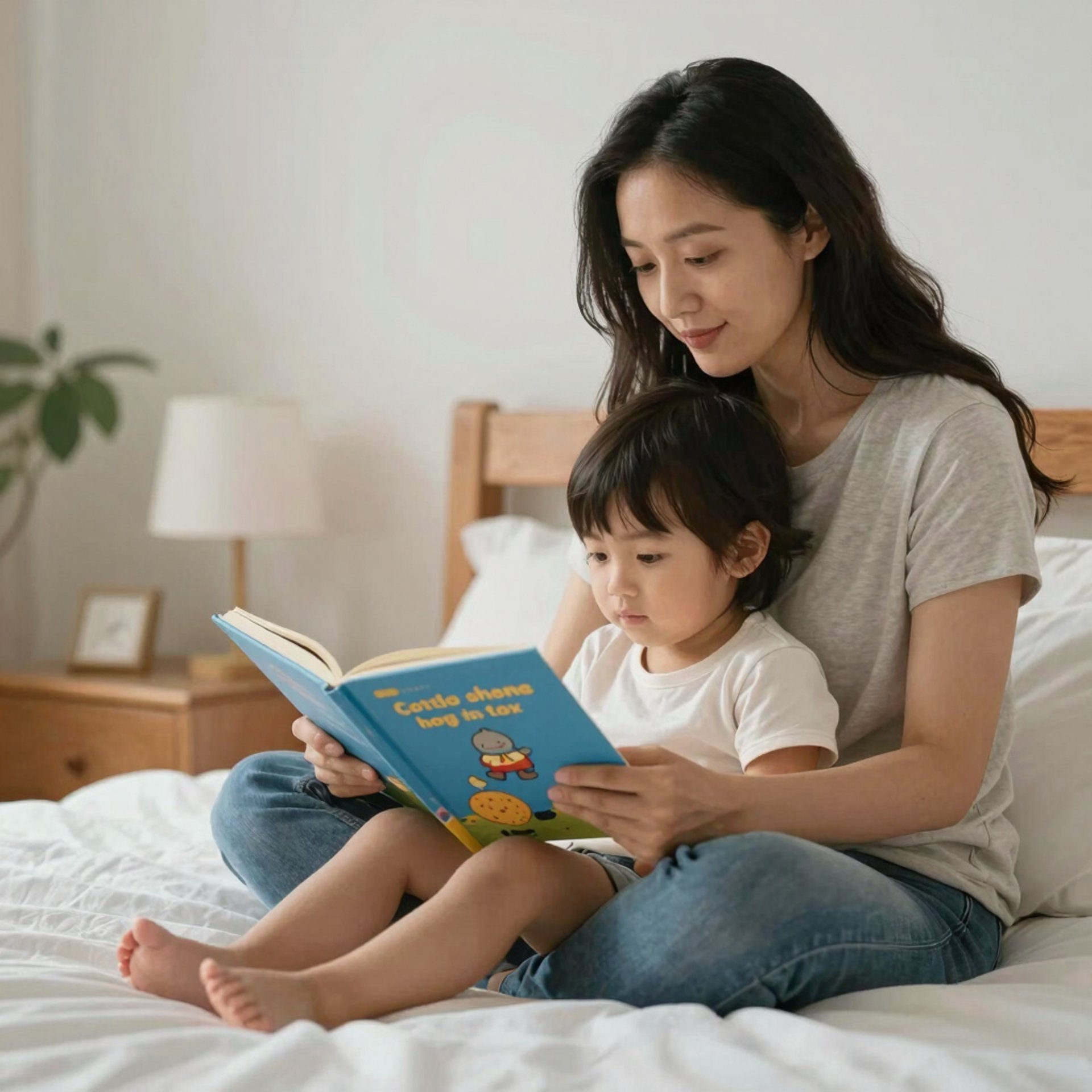
It is 8:47 p.m. You said goodnight eleven minutes ago. Since then, your child has needed water, remembered an urgent question about dinosaurs, suddenly developed a stomachache, and announced — with complete sincerity — that they are not even a little bit tired. If this is your evening, you are not alone, and you are not doing anything wrong. But there is one small shift that can change everything.
Why Kids Stall at Bedtime (It Is Not Manipulation)
Before we talk about solutions, it helps to understand what is actually going on in your child's mind and body when the stalling begins. Here is the thing most parenting advice misses: your child is not stalling to be difficult. They are stalling because bedtime is genuinely hard for them — and their nervous system is doing exactly what it was designed to do.
Children ages 3 through 8 are in a developmental window where the need for connection is at its most intense. The attachment system — the neurobiological machinery that keeps young humans close to their caregivers for survival — does not switch off at 8 p.m. just because we have decided it is bedtime. Going to sleep means separation from you, and separation from you triggers a real, physiological alert in your child's body. That is not drama. That is biology.
The Four Engines of Bedtime Stalling
1. Emotional connection need. Throughout the day, many children spend hours away from parents — at preschool, in daycare, at school. By evening, there is often an emotional deficit, a genuine longing for close contact that has not been fully satisfied. Bedtime feels threatening because it closes the window on connection for the night.
2. Separation anxiety. This is most pronounced in children ages 3–5 but can persist well into the early school years, particularly during transitions (a new sibling, a house move, starting school). The dark room, the silence, the aloneness — these can feel genuinely frightening to a developing nervous system that has not yet built robust self-regulation skills.
3. Fear of missing out (FOMO). Around age 5 and older, children become acutely aware that the world keeps going after they are in bed. You will watch TV. You will talk to each other. Interesting things might happen. Staying awake feels like staying part of things.
4. The developmental drive for control. Young children have very little control over their lives. They cannot choose when to go to school, what to eat for dinner, or what time to go to bed. Stalling is, among other things, an exercise of agency — one of the few levers they can pull. Understanding this does not mean we hand over control of bedtime; it means we build in small, meaningful choices that satisfy the drive without derailing the routine.
74%of parents report that bedtime battles are the most stressful part of the parenting day — yet research shows a consistent routine can cut sleep onset time in half within six weeks.
The One Question That Drains the Stall Tank
After years of trying sticker charts, warnings, timers, and increasingly elaborate reward systems, the shift that actually worked in our family was almost embarrassingly simple. It came from a therapist friend who asked us one thing: "Does your child feel emotionally complete by the time you turn out the light?"
We had to admit: probably not. Our evenings were efficient. Bath, teeth, story, goodnight. Clean and fast. But our daughter was not leaving the day feeling heard. She was leaving it feeling rushed — and so she stalled, because stalling bought her more of us.
The question we now ask every single night, without fail, is this:
"What was the best part of your day? And what was the hardest part?"
That is it. Two parts. Best and hardest. And it has to be asked with genuine attention — phone down, eye contact, no rushing the answer.
Why This Question Works Psychologically
The power of this question is not magic. It is backed by several decades of research in attachment theory, emotional processing, and pediatric sleep science.
First, it signals felt security. Attachment theorists John Bowlby and Mary Ainsworth established that children need to feel that their caregiver is a "secure base" — someone who is emotionally available, not just physically present. When you ask this question with full attention, you become that secure base in the moments before sleep. The child's nervous system registers: I am seen. I am not alone. It is safe to rest.
Second, it facilitates emotional processing. Children, especially ages 3–8, do not naturally sort and file their emotional experiences the way adults do. They carry unprocessed feelings from the day — the fight on the playground, the moment a teacher was sharp with them, the excitement about a birthday party — and those unprocessed feelings keep the brain activated. Naming them, even briefly, begins the neural work of integration. A child who has had a chance to say "the hardest part was when Jake wouldn't play with me" is far more ready to sleep than a child who is still wordlessly carrying that weight.
Third, the question satisfies the connection deficit. Most bedtime stalling is fundamentally a bid for more time with you. This question gives children exactly that — genuine, focused, emotionally attuned connection — but within the structure of the routine rather than in opposition to it. Once the tank is full, there is nothing left to stall for.
Research by Dr. Jodi Mindell, one of the leading pediatric sleep scientists in the world, has repeatedly shown that a consistent, emotionally warm bedtime routine is among the strongest predictors of faster sleep onset, fewer night wakings, and better mood the following day — in children and their parents.
A Complete 30-Minute Calming Bedtime Routine
The best routine is one you can actually do every night — including the nights you are tired, running late, or fighting your own emotional drain. Here is a 30-minute sequence that incorporates connection, wind-down, and a clear ending signal.
7:30 PM — The Wind-Down Signal (2 minutes)
Give a gentle 10-minute warning before the routine begins. "In ten minutes, it's bath time." This warning respects your child's sense of time and reduces transition resistance significantly. When the time comes, offer a small choice: "Do you want to walk to the bathroom or do a silly walk?" Choice = cooperation.
7:32 PM — Bath or Wash-Up (8 minutes)
Warm water is a genuine physiological sleep aid — it raises core body temperature, and the subsequent drop signals the brain that sleep is near. Keep bath time calm, not playful and stimulating. Dim the bathroom lights if you can. This is a good time for quiet chatting about nothing in particular.
7:40 PM — Pajamas and Teeth (5 minutes)
Another small choice here helps: "Do you want the blue pajamas or the dinosaur ones?" Brushing teeth is non-negotiable but can be made less fraught with a timer, a song, or letting the child pick the toothpaste flavor.
7:45 PM — One or Two Books (8 minutes)
Set the number before you start and stick to it. "We are reading two books tonight — you pick them." Reading together is a proven oxytocin-boosting activity that deepens attachment. Choose calm, age-appropriate stories. Avoid anything with high-stakes plots or scary elements close to bedtime.
7:53 PM — The Best/Hardest Question (4 minutes)
Books closed, lights dimmed. Sit beside your child or lie next to them briefly. Ask: "What was the best part of your day? And what was the hardest part?" Listen without fixing. Reflect back what you hear. "That does sound hard. I'm really glad you told me." Four minutes of genuine presence is worth more than twenty minutes of stalling.
7:57 PM — The Goodbye Ritual (3 minutes)
Create a brief, consistent, loving goodbye sequence — your family's version of a closing ceremony. It might be three kisses, a forehead touch, a whispered "I love you to the moon," and a specific phrase that marks the end: "Sleep tight, I'll see you in the morning." The predictability of this sequence is itself calming. Then leave. Fully and warmly, with confidence.
Handling Curtain Calls Without Losing Your Mind
Even with the best routine, most children will still test the end of it. The "curtain call" — that one-more-hug, one-more-drink, one-more-urgent-question moment — is almost universal. How you handle it matters more than whether it happens.
The most effective approach is what sleep researchers call the one-pass rule. Before you leave the room, say warmly: "After this, your body needs to rest. You get one free pass tonight — one more thing. Use it wisely." Then hold to it. If your child comes out again, walk them back calmly, quietly, and without extended conversation. No negotiation. No irritation (or at least, no visible irritation). No storytelling about why they need to stay in bed.
The critical insight here is that your response to curtain calls is what shapes whether they continue. If coming out of bed earns warmth, a long conversation, or even visible frustration (which is stimulating for young children), the behavior is reinforced. A calm, boring, repeated return to bed teaches — over several nights — that leaving the room does not yield anything interesting.
What to Say When They Come Out
Keep your script simple and consistent. Try: "It's sleep time. I love you. Back to bed." Then walk them back without waiting for their response. Do not engage with the stated reason (thirst, fear, stomach pain — unless you have genuine cause for concern). The reason is almost never the real reason. The real reason is that they want to be with you, and that is okay to acknowledge once: "I know you want to be with me. I love you. Sleep time now."
Some families find it helpful to give children a physical object — a "worry stone," a special stuffed animal, a small photograph of the family — that they can hold when they miss their parents at night. This is not bribery; it is a transitional object, a well-documented attachment tool that extends the child's felt sense of security into the alone space of their room.
When Nothing Seems to Work: A Honest Look at the Hard Nights
There will be nights — many of them, probably — when the routine falls apart. You get home late. There is a meltdown over dinner. Your child is overtired and already past the window. You are exhausted and emotionally depleted and the last thing you have to offer is calm, focused presence.
On those nights, the goal is not a perfect routine. The goal is a good enough routine — something that gestures at the structure even if it cannot fully deliver it. Even an abbreviated version of the best/hardest question (thirty seconds, barely), a single book instead of two, and a consistent goodbye phrase is better than abandoning the structure entirely. Research shows that the consistency of a routine matters more than its perfection. A routine done at 70% every single night outperforms a perfect routine done three nights a week.
When to Consider Getting More Help
Most bedtime challenges in the 3–8 age range are normal developmental behavior that responds to routine and connection. But some children struggle with sleep in ways that go beyond typical stalling. If your child shows signs of significant anxiety (extreme distress, physical symptoms, fear that seems disproportionate), frequent nightmares or night terrors, or if sleep problems are affecting their daytime functioning, it is worth a conversation with your pediatrician. Pediatric behavioral sleep medicine is a growing and genuinely helpful field, and there is no shame in seeking support.
It is also worth noting that parental sleep deprivation is a real health issue. If the bedtime battle is costing you significant sleep or significantly affecting your mental health, that is reason enough to seek help — not just for your child's sake, but for yours. You cannot pour from an empty cup, and the research on parental wellbeing and child outcomes is unambiguous: when parents are rested and emotionally regulated, children settle better. Taking care of yourself is taking care of your child.
The evenings that used to leave our family frayed and frustrated now end — most nights — with something that feels almost tender. A question. An honest answer. A goodbye. That shift did not require a sticker chart or a lock on the door or an elaborate reward system. It just required slowing down long enough to fill the tank before the lights went out.
Frequently Asked Questions
What is the best bedtime routine for a 4-year-old?
The best bedtime routine for a 4-year-old is consistent, predictable, and takes about 20–30 minutes. A strong sequence includes a bath or wash-up, pajamas, brushing teeth, one or two books, the best/hardest question, and then lights out. Four-year-olds thrive on ritual — doing the same steps in the same order signals to the nervous system that sleep is safe and near. Avoid screens for at least an hour before bed, and keep the environment calm and dimly lit.
How do I handle the "curtain call" — when my child keeps coming back out?
Curtain calls are best handled with a calm, brief, and consistent response. Many experts recommend a "one pass" rule: your child gets one free request after lights-out (a sip of water, a quick hug). After that, gently walk them back without extended conversation, eye contact, or engagement. The key is removing the reward — if coming out earns warmth, stories, or a parental meltdown (all stimulating for children), the behavior repeats. Consistent, boring re-tucks are far more effective than negotiation.
Is it normal for kids to still need me at bedtime at age 6 or 7?
Absolutely normal. Separation at bedtime is developmentally significant all through middle childhood. Around ages 6–8, children have a growing awareness of the world — including its dangers and uncertainties — and bedtime separations can trigger genuine anxiety. What changes is not the need for connection but the child's growing capacity to manage it with support. A brief, warm, predictable goodbye ritual gives them the emotional scaffolding they need to self-settle. If anxiety feels severe or persistent, talk to your child's pediatrician.
Should I let my child sleep in my bed when they stall?
This is a personal family decision with no single right answer. Co-sleeping can provide comfort, especially during developmental transitions or illness. However, if you are hoping to build independent sleep, allowing bed-sharing as a response to stalling can reinforce the behavior over time. If your child is stalling specifically to get into your bed, it may help to address the underlying need — connection, anxiety, control — during the bedtime routine rather than at the point of conflict. Offer extra warmth during the routine so there is less emotional urgency at lights-out.
How long should a bedtime routine take?
Research by Dr. Jodi Mindell and colleagues suggests 20–30 minutes is the sweet spot for a child's bedtime routine. Short enough to be sustainable every night, long enough to genuinely wind down. If your routine regularly runs 45 minutes to an hour, it likely has too many components or is absorbing stalling behavior into its structure. A tighter, more intentional routine — with a defined ending signal — is usually more effective than a longer, open-ended one.
What if my child says they're not tired?
Children often genuinely do not feel tired even when their bodies need sleep — this is partly because cortisol (a stress hormone) spikes in overtired children, making them feel wired. Rather than arguing about tiredness, frame bedtime as "quiet rest time" rather than mandatory sleep. You can say, "You do not have to sleep — but your body needs to rest quietly in your room." Most children fall asleep quickly once the stimulation stops. Consistent, early-enough start times prevent the overtired cycle that makes this worse.
Sources & Further Reading
Mindell, J. A., Kuhn, B., Lewin, D. S., Meltzer, L. J., & Sadeh, A. (2006). Behavioral treatment of bedtime problems and night wakings in infants and young children. Sleep, 29(10), 1263–1276. American Academy of Sleep Medicine.
American Academy of Pediatrics. (2016). AAP endorses new recommendations on sleep times. Pediatrics. Retrieved from https://www.aap.org
National Sleep Foundation. (2023). Children and sleep: How much sleep do children need? Sleep Health Journal. Retrieved from https://www.thensf.org
Bowlby, J. (1988). A Secure Base: Parent-Child Attachment and Healthy Human Development. Basic Books. (Original attachment theory framework underpinning felt security and separation at bedtime.)
Ainsworth, M. D. S., Blehar, M. C., Waters, E., & Wall, S. (1978). Patterns of Attachment: A Psychological Study of the Strange Situation. Lawrence Erlbaum Associates. (Foundation of attachment research and caregiver sensitivity.)
Mindell, J. A., & Williamson, A. A. (2018). Benefits of a bedtime routine in young children: Sleep, development, and beyond. Sleep Medicine Reviews, 40, 93–108. https://doi.org/10.1016/j.smrv.2017.10.007
Stay
Join our newsletter for parenting tips
Contact
Connect
hello@happyparentstoday.com
Copyright © 2026 Happy Parents Today. All rights reserved.