
Stop Asking Your Kid "How Was Your Day" — Ask This Instead
"How was your day" gets a grunt. This one question gets the actual story. The dinner-table conversation upgrade that takes 10 seconds.
Gizella Nagyne Palinkas
5/29/20268 min read
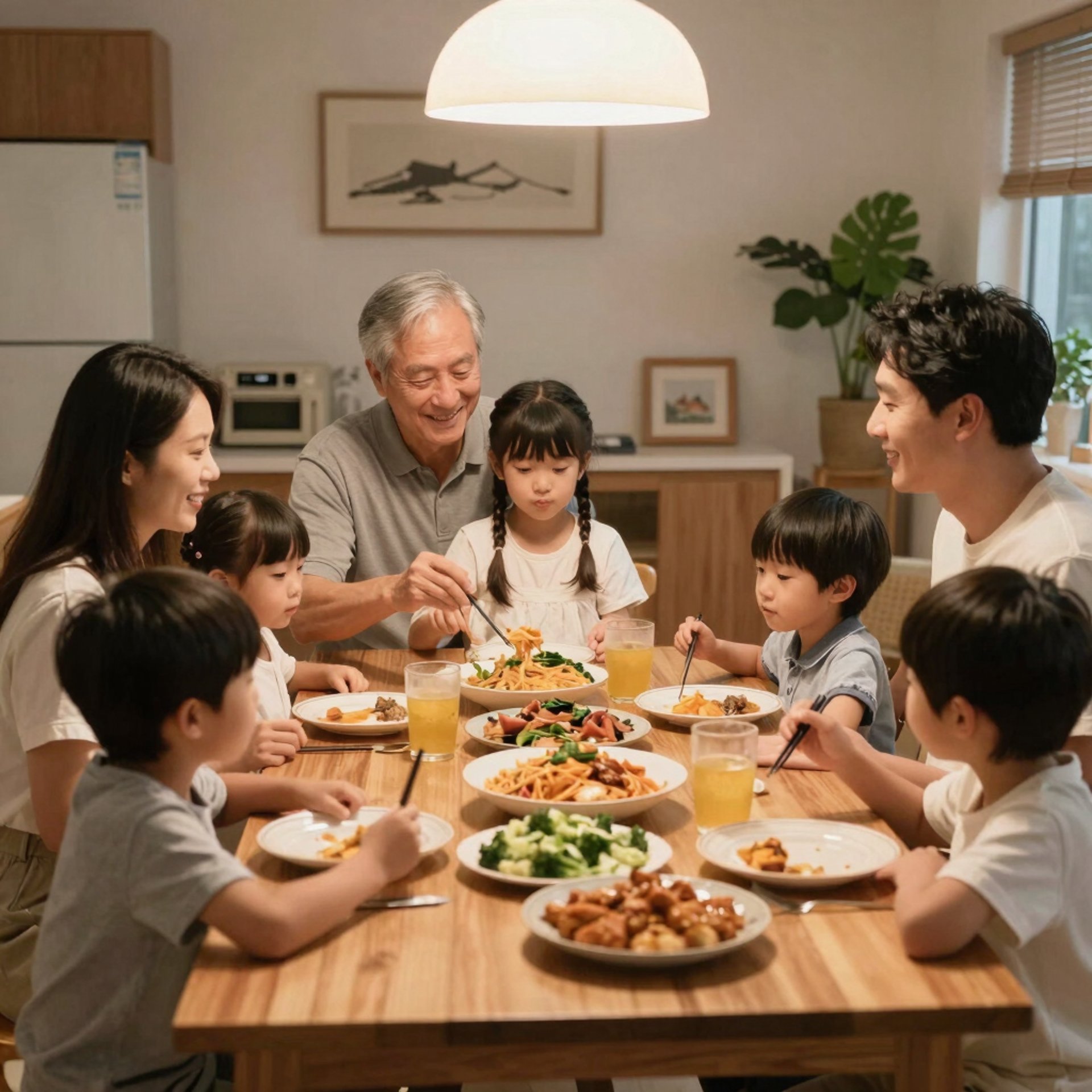
Every parent asks it. Every child shrugs it off. “How was your day?” is the most common dinner question in the world — and arguably the least effective. The good news is that one simple shift in how you phrase the question can open up real, meaningful conversation with even the most tight-lipped child.
The Question That Closes Every Door
There’s a reason “fine” is the universal answer to “how was your day?” It’s not that children don’t have things to say. It’s that the question gives them nowhere to go. “How was your day?” is a closed question — it can be answered with a single word, and children’s brains, particularly after a full day of school, are primed to find the path of least resistance. One syllable ends the interrogation.
There’s also a timing problem. After six to eight hours of school, children arrive home in a state of cognitive and emotional depletion. Their brains have been managing social dynamics, absorbing academic content, and regulating behavior in a highly structured environment all day. When they arrive home, they are not ready to narrate their experience. They need to decompress first — to move, to snack, to be quiet — before they can engage in meaningful verbal reflection.
The dinner table, which typically arrives 30 to 90 minutes after school, is actually a much better moment for conversation — but only if the question is good enough to meet the child where they are. A vague, open-ended question like “how was your day?” is too abstract for a child who hasn’t had time to sort through their experience. Specific, emotionally grounded questions give the brain something concrete to respond to.
The other factor that parents rarely consider is that “how was your day?” is fundamentally a performance request. It asks the child to summarize, to evaluate, to package their experience into a tidy answer. Children — especially those who are introverted, anxious, or simply tired — resist performance. They don’t resist curiosity. The questions that work are the ones that feel like genuine interest, not an interview.
What the Research Says About Children and Open-Ended Questions
Decades of research in child development and language acquisition consistently show that the quality of parent-child conversation has profound effects on children’s vocabulary, emotional intelligence, and social development. Studies from the Harvard Family Dinner Project found that regular, meaningful family mealtimes — characterized by genuine conversation — predict better academic outcomes, lower rates of adolescent depression, and higher levels of family cohesion than virtually any other single family variable.
Open-ended questions specifically drive a phenomenon that researchers call “elaborated talk” — conversation where children are prompted to expand, explain, and narrate rather than simply confirm or deny. When parents use elaborated talk regularly, children develop richer vocabularies, stronger narrative skills, and more nuanced emotional awareness. These are not soft outcomes — they are foundational cognitive and social competencies that affect nearly every area of a child’s life.
The mechanism is simple: when a child is asked “what made you laugh today?” they must search their memory, identify an emotion, locate a specific episode, and put it into words. This process — called episodic memory retrieval with emotional tagging — builds neural pathways associated with self-awareness and emotional literacy. Done consistently at dinner, it is a gentle, powerful daily practice for the developing brain.
6x more words spoken by children when parents use open-ended questions instead of yes/no questions at dinner.
7 Better Questions to Ask Your Child at Dinner
The goal of a good dinner question is not to extract information — it’s to open a door. The best questions are specific enough to give the child something to grab onto, positive enough to lower their defenses, and open enough to let them take the conversation wherever they need to go. Here are seven that work reliably, even with reluctant talkers.
Tip 1
What made you laugh today?
Starts positive, lowers guard. Beginning with something light and joyful primes your child’s brain for openness. Laughter is a social bonding signal — when kids recall a funny moment, they re-enter a positive emotional state and become more communicative.
Tip 2
What’s something that felt hard today?
Opens emotional vocabulary. This question gives children permission to name difficulty without shame. It signals that struggles are normal and worth talking about — building the emotional literacy that underpins resilience.
Tip 3
Who did you sit with at lunch?
Social insight without pressure. This question opens a window into your child’s social world naturally, without the interrogation feel of “Do you have friends?” It invites story, not performance.
Tip 4
If you could change one thing about today, what would it be?
Develops reflection. This question teaches children to evaluate their own experiences — a critical metacognitive skill. It’s also a gentle way to surface frustrations they might not volunteer directly.
Tip 5
What are you looking forward to tomorrow?
Builds optimism. Forward-looking questions shift attention from rumination to anticipation, a key emotional regulation strategy. They also help anxious children build a mental bridge between today and tomorrow.
Tip 6
Did anything surprise you today?
Sparks curiosity and storytelling. Surprise activates the brain’s narrative center. When kids recall something unexpected, they naturally tell a story — and stories are where real connection happens.
Tip 7
What’s something you’re grateful for right now?
Gratitude practice + connection. Research consistently shows that brief daily gratitude practices improve mood, sleep, and prosocial behavior in children. Weaving it into dinner makes it a family culture, not a chore.
How Dinner Conversation Shapes Emotional Intelligence
Emotional intelligence — the ability to identify, understand, and manage one’s own emotions and recognize them in others — is not a fixed trait. It is a skill that develops through practice, and one of the richest environments for that practice is the family dinner table. When children are regularly asked to name how they felt about something, to describe their emotional experience, and to hear their parents reflect that experience back with understanding, they are building the neural architecture of empathy and self-regulation.
Co-regulation is a concept from attachment theory that describes how children learn to manage their own emotional states by being in relationship with a regulated adult. When a parent asks “what felt hard today?” and responds with calm curiosity rather than alarm or advice, they are providing the child with an experience of emotional containment — the felt sense that difficult feelings can be expressed, received, and survived. Over time, children internalize this capacity and begin to regulate themselves.
Longitudinal research from multiple institutions shows that children who have consistent, emotionally attuned family conversations score significantly higher on measures of emotional intelligence, demonstrate better peer relationships, experience lower rates of anxiety and depression in adolescence, and show greater academic resilience when they encounter difficulty. The dinner table, when used well, is one of the most powerful developmental interventions available to families — and it costs nothing.
Creating the Right Environment for Real Talk
Even the best question fails in the wrong environment. Phones on the table, a television in the background, a parent who is half-present and half-scrolling — these send a clear signal that the conversation is not actually important. Children are exquisitely sensitive to authentic interest versus performative interest. If you want them to open up, you have to actually show up.
Tone matters as much as words. The dinner question that works is asked with genuine curiosity, without urgency, and without an agenda. If a child senses that their answer is going to lead to a lecture, a correction, or a worried follow-up phone call to the school, they will close down. The dinner table must feel like a safe space — a place where anything can be said without consequence. This doesn’t mean anything goes. It means that the first response is always curiosity, not correction.
One of the most powerful things a parent can do is go first. Share something from your own day — something real, something slightly vulnerable, something that shows your child that adults also have hard moments and funny moments and confusing moments. “You know what happened to me today that I still don’t understand?” This models the kind of sharing you’re hoping for, and it removes the pressure from the child to perform while you watch.
Making It a Habit: The Dinner Question Jar
Even the most well-intentioned parent runs out of ideas after a few nights. The Dinner Question Jar solves this problem beautifully. Write 20 to 30 questions on slips of paper — include the seven in this article plus any others that feel right for your family’s culture — and put them in a jar in the center of the table. Each night, someone draws a question. It becomes a game, removes the pressure from any one person to always generate the conversation, and introduces an element of delightful unpredictability that children genuinely enjoy.
Families who adopt the question jar consistently report that it transforms dinner from a logistics debrief into something everyone actually looks forward to. Children start asking “whose turn is it to pick?” and adding their own questions to the jar. Grandparents, babysitters, and guests can participate without awkwardness. The jar becomes a family artifact — a symbol of the kind of household this is. And the questions inside it, asked night after night, build something that no curriculum, device, or structured activity can replicate: the deep, durable knowledge that your family is a safe place to be yourself.
Frequently Asked Questions
Why do kids shut down when asked about their day?
After 6-8 hours of school, children are cognitively and emotionally depleted. The brain has been absorbing information, managing social dynamics, and regulating behavior in a highly structured environment. When they arrive home, the last thing they can do is perform a verbal summary of their day. A closed question like “how was your day?” requires them to compress hours of complex experience into a coherent narrative on demand — which is exhausting. The question also offers nothing to respond to; it’s vague, and kids don’t know what you actually want to know. Open-ended, specific questions give them something to grab onto.
What is the best time to talk with kids?
Research suggests the worst time to attempt meaningful conversation is immediately after school. Children need a decompression window — typically 20 to 45 minutes — before they’re ready to engage verbally. During this time, let them snack, move freely, or decompress quietly. Dinner, which naturally occurs 30 to 90 minutes after school, is often ideal. Side-by-side activities like car rides, cooking together, or building something also lower social pressure and tend to produce more candid conversation than face-to-face sit-downs, which can feel like interrogation.
How do I get my teenager to talk?
The instinct to sit across from a teenager and ask how they’re doing almost always backfires. Teenagers are neurologically wired to push back against direct parental inquiry — it triggers the same brain circuits as peer pressure resistance. Instead, try side-by-side engagement: drive them somewhere, take a walk, cook together. Reduce eye contact pressure. Share something from your own day first — real, vulnerable, not performative — and then leave space. Don’t ask follow-up questions immediately. Silence is not failure; it’s processing. The more you demonstrate genuine curiosity without agenda, the more they’ll offer over time.
Does dinner conversation really affect development?
Yes — substantially. Research from the Harvard Family Dinner Project and multiple longitudinal studies shows that children who have regular meaningful family mealtimes score higher on vocabulary assessments, demonstrate stronger emotional regulation skills, have lower rates of depression and anxiety in adolescence, and are more academically resilient. The mechanism is both cognitive (vocabulary and narrative skills built through conversation) and emotional (the experience of being heard, known, and valued by caregivers). The content of the conversation matters less than its quality — consistency, openness, and genuine listening are what drive outcomes.
What if my child says ‘nothing happened’?
Don’t push. Pushing creates shame and resistance. Instead, model what sharing looks like: “Nothing? Well, something weird happened to me today — I completely forgot where I parked. Have you ever done that?” A specific, funny, or slightly self-deprecating story from your own day breaks the ice far better than a follow-up question. You can also try specificity: “What did you have for lunch?” or “Was your teacher in a good mood today?” Concrete, low-stakes questions are easier to answer than open-ended ones, and a small answer often leads to a larger one once the conversational engine is running.
How do I handle difficult topics that come up at dinner?
Stay calm — your nervous system is the thermostat for the whole table. If your child brings up something serious (bullying, a conflict, something upsetting they saw), resist the urge to immediately fix, question, or correct. First, validate: “That sounds really hard. Tell me more.” Avoid turning it into a lesson or a warning. Let them lead. If the topic is too big or raw for the dinner table, acknowledge it and promise to continue: “I really want to hear more about this. Can we talk more after dinner, just the two of us?” Always follow through. The worst thing is for a child to open a difficult door and find no one home on the other side.
Stay
Join our newsletter for parenting tips
Contact
Connect
hello@happyparentstoday.com
Copyright © 2026 Happy Parents Today. All rights reserved.