
Flying with a Toddler: The Complete Survival Guide for Stress-Free Air Travel
Planning to fly with a toddler? Get practical tips for booking, packing, airport navigation, and keeping your toddler calm and happy from takeoff to landing.
Gizella Nagyne Palinkas
6/17/20267 min read
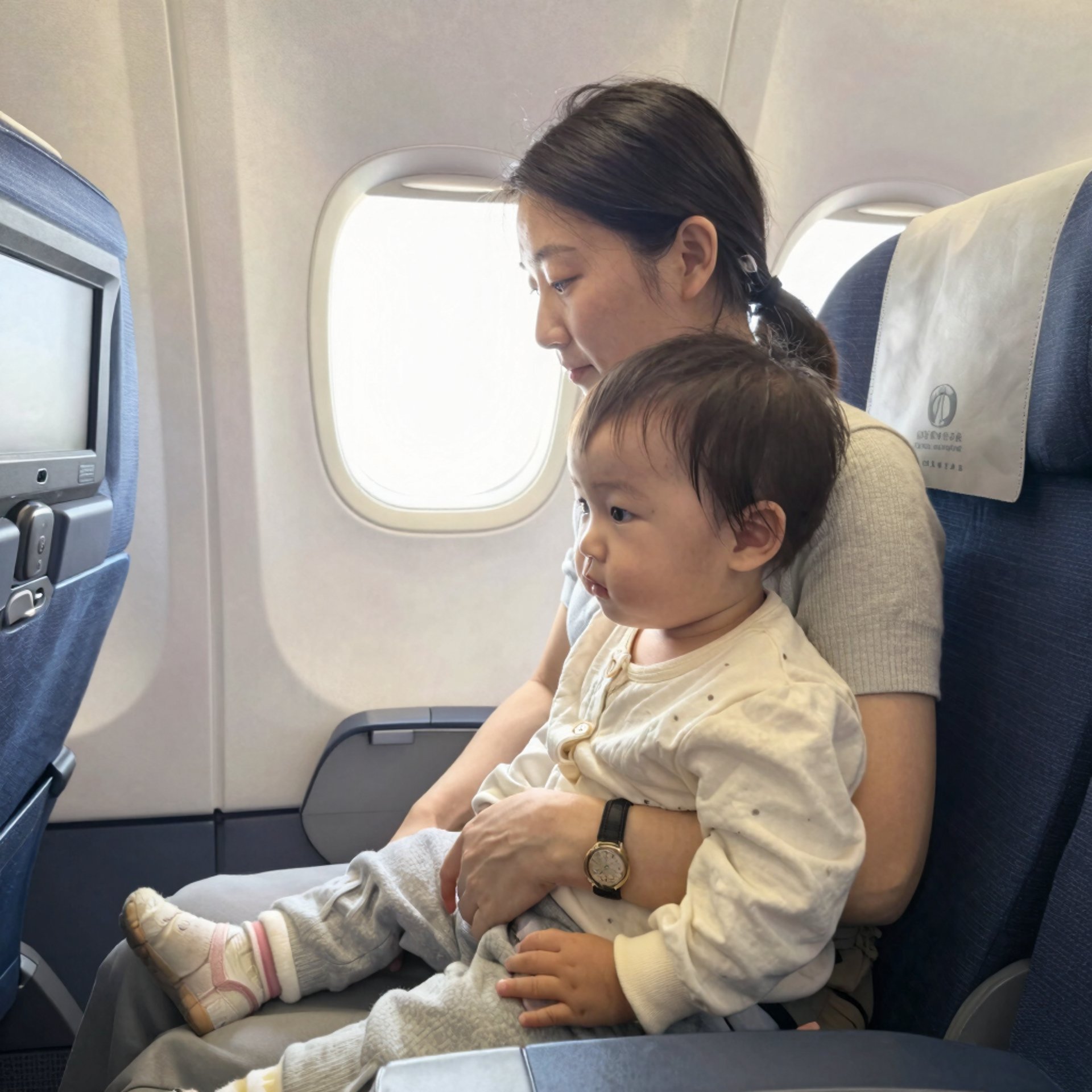
You have done it: booked the flights, packed the bags, and now you are standing at airport security with a toddler on your hip, a carry-on in each hand, and a look in your eyes that says "I either planned this brilliantly or completely underestimated what I just signed up for." This guide is here to make sure it's the first one.
I remember the first time I flew with my daughter as a toddler. I had read all the articles, packed the snacks, downloaded the shows. And yet nothing quite prepared me for the moment she decided that the seatbelt was her mortal enemy, takeoff was happening at the exact wrong point in her nap schedule, and the man in the seat ahead of us turned around with the kind of look that makes you want to disappear.
Here is what I have learned since then, from our own flights and from the collective wisdom of thousands of parents who have been through it: flying with a toddler is absolutely manageable. Not always smooth. Not always quiet. But manageable — and sometimes even genuinely enjoyable — when you know what you are doing.
Step One: Timing Your Flight Around Your Toddler's Sleep
If there is one piece of advice that will have the single greatest impact on your flight experience, it is this: book your flights around your toddler's natural sleep schedule. Not around the cheapest fare. Not around what works for the adults. Around the nap window.
Most toddlers between 12 and 36 months still nap once a day, usually in the late morning or early afternoon. A flight that takes off at or slightly before nap time is your golden ticket. Your toddler will struggle to stay awake on a moving plane in a dimly lit cabin — and if you time it right, you will spend the majority of the flight with a peacefully sleeping child on your lap or in their seat.
Early morning flights — before 9am — are also a strong choice. Toddlers are typically at their best in the morning: fed, rested, and in a good mood. They are naturally alert and more willing to engage with activities. The airport experience feels novel and interesting rather than overwhelming. And if the flight is long enough, they often drift off mid-flight without any effort on your part.
The flights to avoid if you possibly can: mid-afternoon departures (the witching hour for most toddlers) and late-evening red-eye flights, unless your toddler is an unusually reliable car-seat sleeper. The exhausted-but-can't-sleep toddler is the version of this experience you most want to avoid.
Understanding Toddler Flight Meltdown Triggers
Meltdowns on planes are not random. They are almost always predictable, which means they are almost always preventable — or at least reducible in intensity — once you know what you are dealing with. The chart below shows the most common triggers and how often targeted prevention strategies actually work.
72% of toddler in-flight meltdowns involve ear pain as a contributing factor, making pressure management during takeoff and descent the single most impactful thing you can do to prevent tears on a plane.
The Carry-On Essentials Kit: What Goes in the Bag
Your carry-on for a toddler flight is not a bag — it is a mission control center. What you pack in it, and how accessible it is during the flight, will make or break your experience. Here is what needs to be in that bag, organized by purpose.
1
The Comfort Layer
This is the stuff that travels everywhere and cannot be substituted: your toddler's comfort object (their special stuffed animal, their comfort blanket, the one small toy that is non-negotiable at sleep time), a familiar pacifier if they still use one, and their own small pillow if they are attached to it. The comfort layer is not about entertainment — it is about emotional anchoring. In a strange, loud, confined environment, these objects tell your toddler's nervous system that everything is still okay.
2
The Snack Strategy
Snacks on a plane serve double duty: they keep hunger at bay and they occupy tiny hands and mouths. The golden rules of toddler flight snacking: bring familiar favorites, not exciting new things (this is not the moment to discover your toddler hates rice cakes); pack snacks that take a while to eat and are low-mess (cheese sticks, mini rice cakes, raisins in small boxes, apple slices in a sealed container); bring more than you think you need, because time passes very slowly at altitude; and pack an empty sippy cup to fill with water after security. Sucking on a drink during takeoff and descent also helps with ear pressure — a practical bonus.
3
The Entertainment Rotation
The key word here is rotation. Do not dump everything out at once. Think of your entertainment bag as a series of reveals, each timed to when the previous activity has run its course. Start with a window sticker book — the novelty of sticking things to the plane window buys you at least 20 minutes. Move to a new small toy they haven't seen. Then a snack. Then a familiar book. Then screens. Spreading your reveals across the flight keeps engagement levels up throughout rather than blowing your entertainment budget in the first 30 minutes.
For non-screen activities, the best performers are: reusable sticker books, small magna-doodle boards, simple finger puppets, a felt board with shapes, and age-appropriate activity books with stickers. For screens: download 2–3 episodes of a beloved show and 1 new show they haven't seen, and bring child-safe headphones that fit toddler-sized ears properly.
4
Ear Pressure Management
Ear pain during takeoff and descent is one of the most common causes of toddler distress on planes, and it is almost completely preventable. The mechanism is simple: pressure changes in the cabin affect the middle ear, and swallowing equalizes the pressure. Your job is to give your toddler a reason to swallow during these phases. For breastfed or bottle-fed toddlers, nursing or feeding during takeoff and descent is ideal. For older toddlers, have a drink or a chewy snack ready the moment the plane begins its climb or descent. Lollipops during descent are a legitimate and effective trick that parents swear by. If your toddler has a cold, ear infection, or congestion on the day of travel, consult your pediatrician in advance — they may recommend a decongestant or nasal drops to prevent significant pain.
The In-Flight Bag of Tricks
Even the most prepared parents encounter moments mid-flight when the plan goes sideways. Here is what actually works when you need to improvise.
🚶
Walk the Aisle
A slow walk up and down the aisle is a legitimate and effective toddler reset. It changes the scenery, gets blood moving in little legs, and often breaks a spiral before it becomes a meltdown. Aim for the back galley where flight attendants tend to be — they are usually far more toddler-friendly than you expect.
🎭
The Peekaboo Reset
When all else fails and your toddler is starting to lose it, drop everything and play peekaboo. It sounds too simple, but it genuinely works — it redirects attention, triggers giggling, and breaks the tension cycle before it escalates. Keep it in reserve as an emergency tool.
📱
Screens Are Allowed
This is not the time for screen guilt. On a plane, screens are a legitimate parenting tool and everyone on board benefits when your toddler is calm. Use child-safe headphones and sit back. The AAP's screen guidance is not designed for 30,000 feet.
🤝
Recruit the Flight Attendants
Introduce yourself and your toddler early. Ask if there are any spare wings pins or special items for young fliers — many airlines have them. Flight attendants who feel like part of your team will often pop by, wave, or bring a little something that distracts your toddler at just the right moment.
🪟
The Window Seat Strategy
Always book a window seat for your toddler if possible. The window is entertainment gold — watching the ground disappear, spotting clouds, pressing a little nose against the glass. It provides a natural focal point during both the most exciting and most difficult parts of the flight.
👕
Pack an Extra Outfit for You
Bring a change of clothes for yourself, not just your toddler. Spills, spit-up, and unexpected diaper explosions at altitude are real. Arriving at your destination in a clean outfit while your toddler naps is a small luxury worth every square inch of carry-on space.
On Judgment Looks and What to Say
Let me say this plainly: you are allowed to be on this plane. Your toddler is allowed to be on this plane. Toddlers have been flying since commercial aviation existed, and they will continue to fly. You owe your fellow passengers your best effort — and you are giving it, because you are reading this and you came prepared — but you do not owe them a silent child, because that is not within your control and it is not within any honest person's reasonable expectation.
The vast majority of passengers, when you smile apologetically, are immediately on your side. Parents remember. Non-parents who were once children remember. The genuinely irritated traveler is a small minority, and they will survive.
If someone does say something unkind, a calm "I'm doing my best — thank you for your patience" shuts the door on the conversation without escalating it. You do not need to justify your presence or your child's. Keep your focus where it belongs: on your toddler, on the moment, on getting through the flight phase by phase. Gate to runway. Runway to cruising altitude. Cruising altitude to descent. Descent to arrival. Break it into chunks and handle one chunk at a time.
Frequently Asked Questions
What is the best time of day to fly with a toddler?
The best flight times are those that align with your toddler's natural sleep windows. For most toddlers, this means early morning flights (before 9am, overlapping with a nap window) or flights that depart at their usual nap time. Avoid mid-afternoon flights when toddlers are often at their most alert and resistant to sitting still.
How do I manage ear pressure for my toddler on a plane?
Sucking and swallowing are the most effective ways to equalize ear pressure. Offer a drink from a sippy cup or a snack during takeoff and descent. Breastfeeding or bottle feeding during these phases also works very well. For toddlers over 2, lollipops or chewy snacks during descent can help. If your toddler has a cold or ear infection, consult your doctor before flying.
Should toddlers have their own seat on a plane?
The FAA and most pediatric safety organizations recommend that children under 40 pounds use an approved child safety seat on planes rather than sitting on a parent's lap. While lap seats are cheaper and legal for under-2s, a safety seat is significantly safer and gives your toddler a defined personal space, which actually reduces meltdowns.
What should I pack in my carry-on when flying with a toddler?
Your carry-on essentials: a change of clothes for both the toddler and yourself, diapers or training pants plus wipes, a comfort object, 2–3 new or novel small toys, healthy snacks, an empty sippy cup (fill after security), a light blanket, headphones sized for toddlers, and a downloaded show or app as backup. Keep the bag accessible under the seat in front of you.
How do I deal with other passengers judging my toddler's behavior on a plane?
You are allowed to fly. Toddlers are allowed to fly. The vast majority of passengers are far more understanding than you expect, and those who aren't are not your responsibility. A simple smile and an 'I'm sorry if she's bothering you' goes a long way. Focus on your child, not on the critics.
Is it okay to use screens for toddlers on a plane?
Yes, and without guilt. Screen time guidance from organizations like the AAP is designed for everyday home life — not for a 4-hour flight at 30,000 feet. Download a few of your toddler's favorite shows and 1–2 new ones, use child-safe headphones to protect little ears, and supplement with non-screen activities for a layered approach.
Stay
Join our newsletter for parenting tips
Contact
Connect
hello@happyparentstoday.com
Copyright © 2026 Happy Parents Today. All rights reserved.