How to Raise a Bilingual Child in Europe (Even If You're Not Fluent)
Raise a bilingual child in Europe, even if you're not fluent: what research says about the critical window, 5 strategies beyond OPOL, and practical tools.
Gizella Nagyne Palinkas
4/19/20268 min read
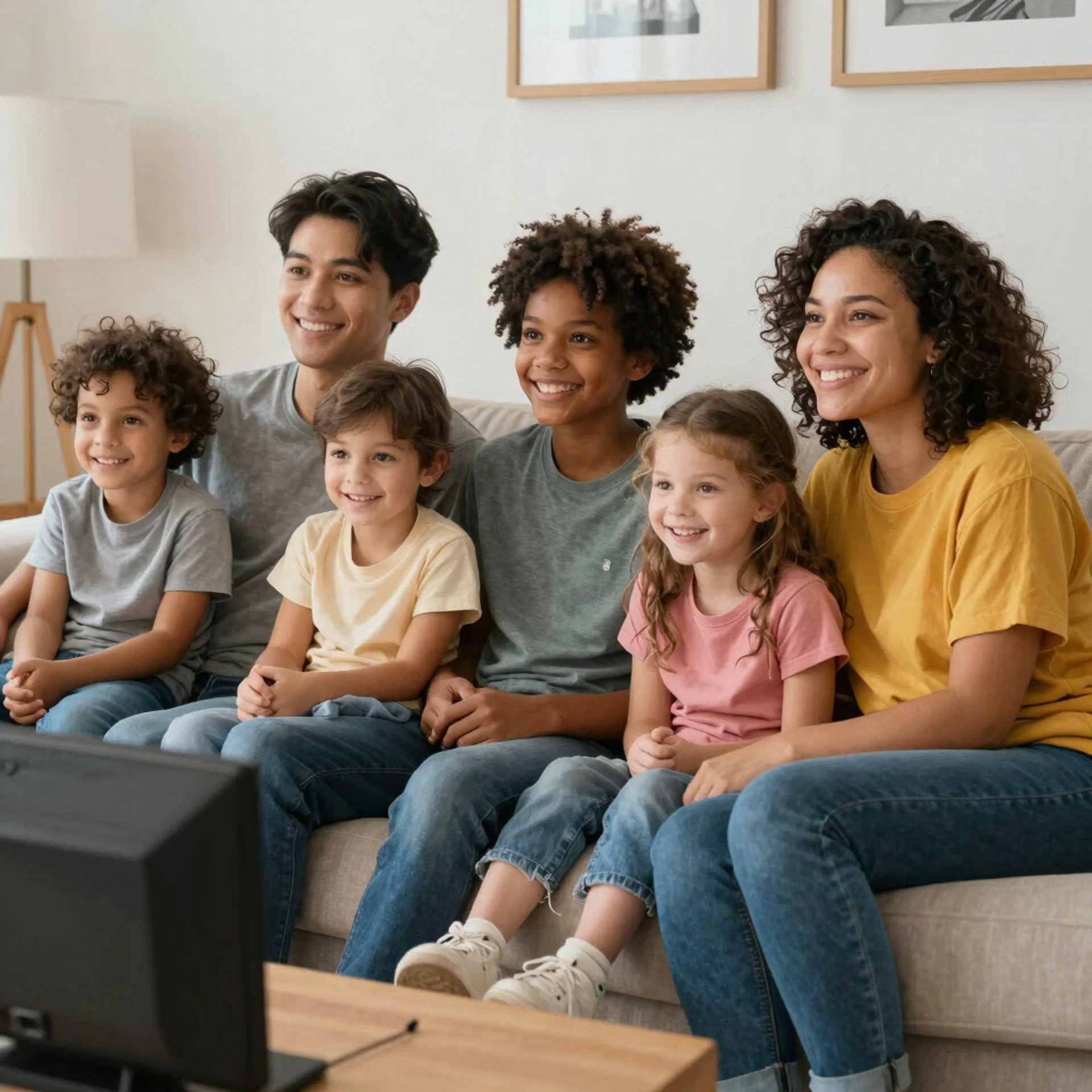
In our multilingual home, dinner conversations often shift between two languages mid-sentence — and that, it turns out, is not a problem. It's exactly the point. Raising a bilingual child in Europe is one of the most natural and rewarding things you can do for your child's developing brain. Here's what actually works — and what the research says you can stop worrying about.
Europe's Multilingual Landscape: Why You're Already in the Right Place
Europe is unlike almost anywhere else in the world when it comes to language diversity. With 24 official EU languages, hundreds of regional dialects, and millions of families who have crossed borders for work, love, or adventure, multilingualism isn't the exception here — it's woven into the fabric of daily life. A Hungarian family in Vienna. A Dutch couple in Barcelona. A Polish grandmother calling her grandchildren in London. These are not edge cases; they are the European story.
Yet despite this rich linguistic backdrop, many parents still feel uncertain. Maybe your partner's native language is one you only partly speak. Maybe you moved abroad before your children were born and now worry that the majority language of your new country will crowd out everything else. Maybe you simply don't know where to start.
The good news: you don't need to be a language professor to give your child the gift of bilingualism. You need consistency, community, and a few smart strategies — all of which are more accessible in Europe than almost anywhere else on earth.
56%
of Europeans speak at least two languages, according to Eurostat — making the continent uniquely positioned to support bilingual families through schools, media, and community networks.
The "Critical Window" Myth: What Research Actually Says
Every bilingual parenting discussion eventually arrives at the same anxiety-inducing phrase: the critical period. The idea goes something like this — if your child hasn't been exposed to a second language by age three (or five, or seven, depending on who you ask), the window closes and it's too late for native-like fluency.
Here's the truth: the research simply doesn't support that version of events. What neuroscientists and linguists like Patricia Kuhl and Ellen Bialystok have found is a sensitive period — not a cliff. The brain is especially receptive to phonological acquisition (sound patterns) in the first few years of life, which means younger children tend to develop a native-like accent more easily. But grammar, vocabulary, reading, and communicative fluency can be built at any age.
In Bialystok's 2011 work on bilingualism and brain development, she found that the cognitive advantages of bilingualism — executive function, attention control, working memory — were evident in children who had consistent dual-language exposure, regardless of whether that exposure began at birth or at age four. The quality and consistency of input matters far more than the precise starting date.
What this means for you: if your child is three and you're just beginning to introduce the minority language more intentionally, you haven't missed anything irreversible. If your child is seven and you're wondering whether it's still worth making the effort, the answer is unequivocally yes. The window doesn't slam shut — it just gradually requires a little more deliberate effort to climb through.
Can Non-Fluent Parents Raise Bilingual Children? Yes — Here's How
One of the most persistent myths in bilingual parenting is that you must be a fluent, native-level speaker to pass on a language. This idea leaves a lot of parents feeling disqualified before they've even started. But Annick De Houwer's research on bilingual first language acquisition makes clear that children can develop strong bilingual foundations even when a parent's own proficiency is imperfect — as long as the child has consistent, meaningful exposure through multiple channels.
Think of yourself less as the sole language teacher and more as the language architect. Your job is to build an environment where the minority language is present, valued, and — crucially — useful. You don't have to be the one delivering all of it. That's what grandparents, playgroups, books, apps, and summer visits are for.
5 Strategies Beyond OPOL That Actually Work
One Person, One Language (OPOL) is probably the most widely cited bilingual parenting strategy — and it works well for many families. But it's not the only path, and it's not always realistic. Here are five approaches that our community has found genuinely effective in the European context.
1
Minority Language at Home (mL@H)
Instead of splitting by parent, the whole household commits to using the minority language at home, while the majority language naturally dominates outside. This works especially well for families where both parents speak the minority language — or where one parent is willing to use it even if it's not their native tongue. The logic is simple: the outside world will take care of the majority language. Your home becomes the protected space for the language that needs more nurturing. Many European expat families have found this approach dramatically more effective than OPOL, because children quickly learn that home = language A, and school/friends = language B.
2
Grandparents as Language Resource
If your parents or in-laws speak the minority language natively, they may be your single greatest bilingual parenting asset — and they probably don't even know it yet. Regular video calls in the minority language, summer visits, and grandparents who simply refuse to switch to the majority language create a powerful emotional motivation for children to engage. Children want to communicate with the people they love. When Grandma only speaks Hungarian, learning Hungarian becomes personal. Research by Paradis (2010) shows that emotionally significant relationships dramatically increase language retention in bilingual children. Brief your parents: don't switch languages, don't give up when the child responds in the majority language, and keep the relationship warm and playful.
3
European Bilingual Playgroups and Schools
Most major European cities — and many smaller ones — have a thriving infrastructure of minority language playgroups, heritage language Saturday schools, and bilingual or immersion nurseries. Polish Saturday schools in the UK. Dutch playgroups in Germany. French bilingual programs in Spain. These are not rare or difficult to find; they are community-run institutions that have existed for decades. Even attending for just two hours on a Saturday makes a significant difference, because it sends a powerful social message to your child: other children speak this language too. Peers matter enormously. One study found that children whose minority language peers were regular playmates retained significantly more vocabulary than those who only heard the language from parents.
4
Minority Language Media: Shows, Audiobooks, and YouTube
Screen time tends to get a bad reputation in parenting discussions, but when used intentionally, minority language media is one of the most scalable input strategies available. The European Broadcasting Union and its member channels — from RTVE in Spain to RTE in Ireland to TVP in Poland — all have children's programming freely accessible online. YouTube channels in almost every European language carry thousands of hours of age-appropriate content. Audiobooks in the minority language work especially well for car rides and bedtime. The key is that the media should supplement human interaction, not replace it — but 30 minutes of immersive TV in the minority language, followed by a conversation about what your child just watched, is genuinely valuable input.
5
Summer Immersion: Visiting Family and Language Camps
Nothing accelerates minority language acquisition quite like two weeks in a place where the majority language simply isn't available. Whether that means a summer at your parents' home in another country, or enrolling your child in a language camp run by a diaspora organization, the total immersion experience compresses months of gradual progress into weeks. European families have a geographic advantage here: even a long weekend across a border can expose children to the minority language in real, functional contexts — ordering food, playing with cousins, navigating a market. Kuhl's research on phonological acquisition shows that live, responsive human interaction in a language produces far deeper neural encoding than passive exposure. Summer visits tick every box.
Practical Tools for the European Bilingual Home
Strategy is one thing; implementation is another. Here are the tools that bilingual families across Europe rely on — tried, tested, and genuinely useful.
📚
Bilingual Picture Books
Side-by-side bilingual editions from publishers like Milet and Barefoot Books make bedtime reading double duty. Choose books with simple, repetitive language and vivid illustrations — these work best for building vocabulary in early years.
📱
Language Apps for Little Ones
Lingumi (ages 2–6) and Gus on the Go are purpose-built for young bilingual learners. Both use play-based interaction in the minority language and require no parental language knowledge to operate. Great for independent morning time.
👶
Local Minority Language Playgroups
Search Facebook Groups, Meetup, or Internations in your city for playgroups in your minority language. In Berlin, Paris, Amsterdam, London, and most other European capitals, you'll find multiple options within commuting distance.
🏫
Heritage Language Saturday Schools
Funded or community-run Saturday schools exist for dozens of minority languages across Europe. The European Heritage Language Schools network is a useful starting point. Two hours a week of structured learning adds up fast.
✉️
Pen Pals and Language Exchange
Organizations like the European Language Portfolio and diaspora community networks can connect your child with a pen pal in the minority language country. Even exchanging voice messages via WhatsApp counts — and children love the novelty.
📺
European Minority Language TV Channels
BBC iPlayer, RTVE, ARD Mediathek, TVP ABC (Poland), Minimax (Hungary/Romania), and dozens of other public broadcaster children's platforms offer free, age-appropriate content. Set one as the default for after-school TV time.
Managing Realistic Expectations: What Bilingualism Actually Looks Like
One of the most helpful things we can do as bilingual parents is calibrate our expectations to what the research actually shows — not what we imagine a "perfectly bilingual" child looks like. Here's a realistic snapshot by age.
At age 2: A bilingual toddler may have a smaller vocabulary in each individual language than a monolingual child of the same age — but their total word count across both languages is typically equivalent. Code-switching (mixing words from both languages in one sentence) is completely normal at this age. It is not confusion; it is a sign the brain is actively managing two systems.
At age 4: Most bilingual children have sorted their two languages into separate systems. They know which language to use with which person. The minority language may already be noticeably weaker if it receives less input — this is the time to be especially intentional about community exposure and media.
At age 6: School-age children in the majority language environment will often show a marked shift toward the majority language — this is called language dominance shift and is entirely predictable. It does not mean the minority language is lost. It means the outside world has begun competing seriously. Reinforce the minority language with reading, weekend school, and dedicated family time.
At age 8: A child who has had consistent minority language input will typically have functional bilingualism — they can hold conversations, understand stories, and operate comfortably in both languages. Native-like literacy in the minority language requires deliberate investment in reading and writing, usually through heritage schools or structured reading at home.
The single most important thing to remember: bilingualism is not binary. It exists on a spectrum, and any point on that spectrum is a genuine achievement. A child who understands their grandparents' language but mostly responds in the majority language is still bilingual. A child who speaks the minority language fluently but can't read it is still bilingual. Progress is progress — celebrate all of it.
The Most Important Thing
Raising a bilingual child is not a project with a deadline. It's a long, sometimes imperfect, frequently joyful process of building a relationship between your child and a language — and through that language, with the people and places and culture that language carries. In our multilingual home, we've had weeks where the minority language barely made an appearance, and weeks where it was everywhere. That's okay. The cumulative weight of consistent effort over years is what matters.
You don't need to be fluent. You don't need to have started at birth. You need to start now, keep going, and trust that every conversation, every bedtime book, every video call with Grandma is doing more than you can measure in the moment. Europe's resources are around you. Use them. Your child's bilingual future is closer than you think.
Sources & Further Reading
Bialystok, E. (2011). Bilingualism: Consequences for Mind and Brain. Trends in Cognitive Sciences.
Kuhl, P. (2010). Brain mechanisms in early language acquisition. Neuron, 67(5).
European Commission — Eurostat: Foreign Language Skills Statistics.
Paradis, J. (2010). The interface between bilingual development and specific language impairment. Applied Psycholinguistics, 31(2).
De Houwer, A. (2009). Bilingual First Language Acquisition. Multilingual Matters.
Stay
Join our newsletter for parenting tips
Contact
Connect
hello@happyparentstoday.com
Copyright © 2026 Happy Parents Today. All rights reserved.