
The Parenting Hack Pediatricians Actually Use at Home
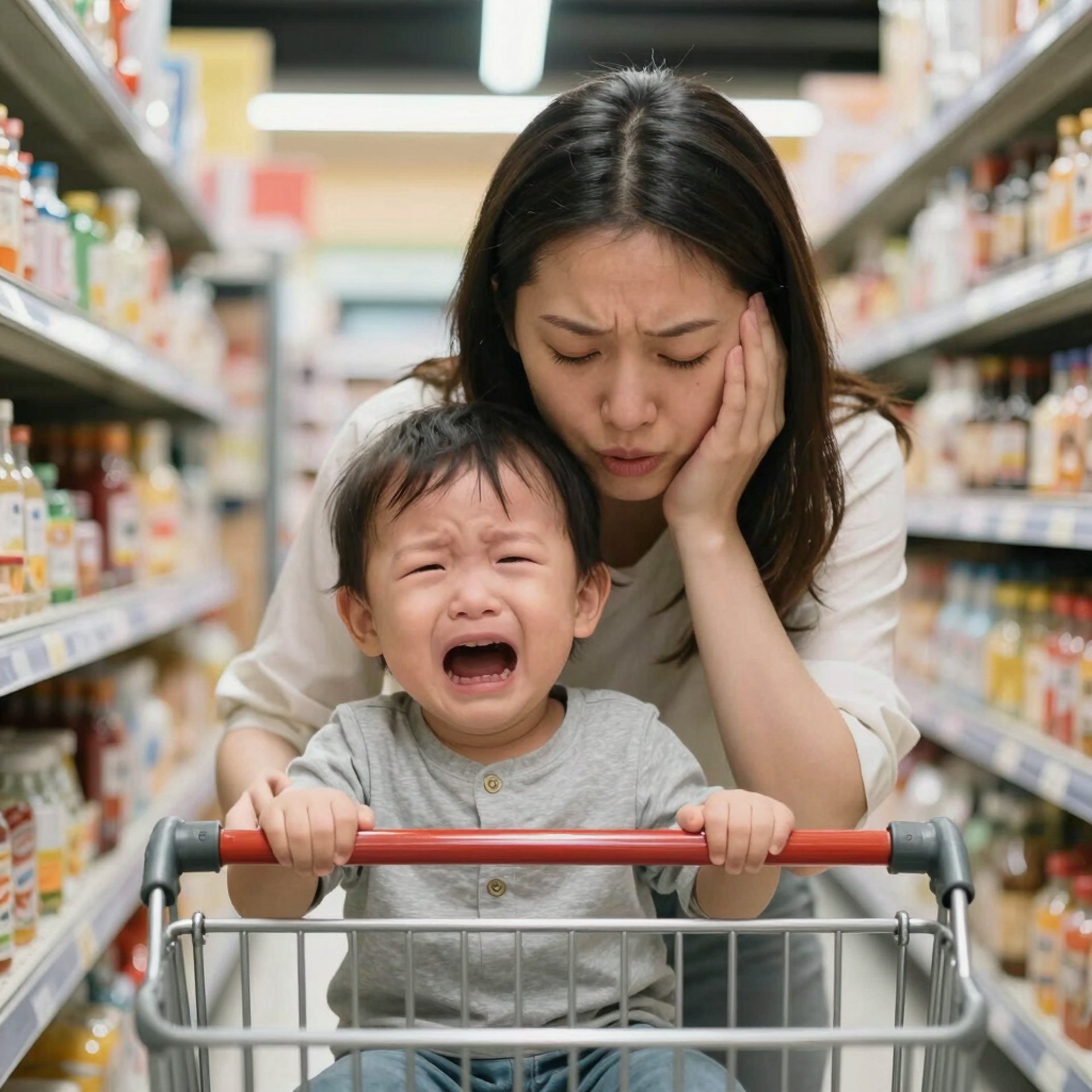
Every parent has been there: you're standing in the middle of a supermarket, your toddler is escalating fast, and you have approximately three seconds before full meltdown. You try reasoning, bribing, threatening, and none of it works. What if I told you there's a technique pediatricians actually use with their own children — one that works in seconds, doesn't involve yelling, and is backed by decades of neuroscience? It's called the sportscaster method, and once you learn it, you'll wonder how you ever parented without it.
Gizella Nagyne Palinkas
6/10/20268 min read
We asked pediatricians what they actually do differently at home — not the advice they give in appointments, but the practices they've quietly built into their own family life based on years of reading the research. What they said might surprise you.
There's a gap between what pediatricians say in the exam room and what they actually do at home. The exam room advice is often a lowest-common-denominator message designed to be useful for a wide range of families in a short visit. But at home, with their own children, pediatricians who've gone deep on the developmental science tend to apply something more nuanced — and more effective.
This article isn't based on a formal survey. It's a synthesis of what the pediatric and developmental literature actually says, combined with the recurring themes that come up when clinicians who've read that literature talk about their own family practices. These aren't obscure or difficult interventions. They're simple, consistent behaviors that, applied together, create a substantially different developmental environment for children. Most of them don't require money or extra time. They do require intention.
7 Evidence-Based Practices Pediatricians Use With Their Own Kids
1
They Protect the Sleep Window — Fiercely
Pediatricians know sleep is the single highest-leverage intervention available to parents. For children under 6, most pediatricians aim for lights-out by 7:00–7:30pm — earlier than most families attempt. They protect the pre-sleep window with zero screens 60 minutes before bed (blue light suppresses melatonin production), dim lighting, and the same sequence every night. Consistency is the mechanism: the brain begins preparing for sleep when it recognizes familiar cues. Research is unambiguous — adequate sleep affects behavior, immunity, learning, emotional regulation, and long-term metabolic health. Sleep is not optional recovery; it's developmental medicine. Pediatricians treat bedtime with the same seriousness they'd treat a prescribed intervention, because that's essentially what it is.
2
They Use the Division of Responsibility at Meals
Ellyn Satter's Division of Responsibility is arguably the most evidence-backed feeding framework for children — and most pediatricians who've read it use it at home. The principle: parents decide WHAT is served and WHEN. Children decide IF they eat and HOW MUCH. No pressure. No rewards ("three more bites and you can have dessert"). No bribing with screen time. No clean-plate rules. This approach — supported by decades of research — produces children with better relationships with food, less picky eating as they age, and significantly lower rates of eating disorders. The hardest part is trusting the process when your toddler eats only crackers for a week. Pediatricians who use this framework report that trust is exactly what's required, and that the results consistently reward it.
3
They Let Natural Consequences Do the Teaching
Pediatricians aren't anti-discipline — but the ones who've read the behavior literature tend to rely on natural and logical consequences over punitive responses. "You threw the toy repeatedly after a warning, so the toy takes a break for 10 minutes." They mean it — no second chances that undermine the consequence. "You didn't wear your jacket when I suggested it; now you're cold." They allow the cold. The mechanism: children who experience predictable, proportionate consequences develop stronger internal regulation than those who experience unpredictable punishment. The key word is predictable — the consequence always follows the behavior, consistently. What makes this hard for most parents is the impulse to rescue. Pediatricians who use this approach have learned to sit with the short-term discomfort of allowing natural consequences because they've seen the long-term payoff.
4
They're Strategic About Illness Prevention (Not Paranoid)
Pediatricians wash their children's hands frequently — particularly before eating and immediately after school. They know that most childhood illness enters through the eyes, nose, and mouth via hand contact. What they DON'T do is obsessively sanitize everything or avoid all sick contact. Controlled, normal exposure to everyday germs builds immune function. The research is clear: children raised in overly sanitized environments have higher rates of allergies, asthma, and autoimmune conditions. The hygiene hypothesis is real. Pediatricians teach good habits — hand-washing technique, not touching the face — and then trust the immune system to do its job. They also tend not to reach immediately for antibiotics when a child is sick. They watch, wait, and intervene only when intervention is genuinely warranted.
5
They're Pro-Context on Screen Time (Not Anti-Screen)
Most pediatricians don't police exact screen minutes in their own homes. What they do care about deeply is context. Co-viewing — watching WITH your child and talking about what you're seeing — is fundamentally different from parking them in front of a screen. They choose quality content with intention. They keep screens out of bedrooms. They don't use screens as behavior management, which research shows teaches emotional avoidance rather than regulation — children who learn that screens make uncomfortable feelings go away don't learn to regulate those feelings, they learn to avoid them. The AAP framework — no screens under 18 months (except video calls), 1 hour of quality content for ages 2–5, contextual limits after that — is what most pediatricians actually follow. The emphasis is always on what's happening during the screen time, not just how many minutes it lasts.
6
They Prioritize Outdoor, Unstructured Play — Even in Bad Weather
The research on outdoor, unstructured play and child brain development is among the most compelling in developmental pediatrics. Sixty minutes minimum per day of outdoor activity — running, exploring, digging, climbing — measurably improves attention, executive function, anxiety levels, and mood in children. Vitamin D synthesis, vestibular system development, proprioceptive input — all happen outside. Pediatricians don't let light rain or mild cold stop outdoor time. They know that an appropriate cold is far less damaging than chronic indoor confinement. The phrase in pediatric circles: "There is no bad weather, only inappropriate clothing." Unstructured is the critical word here — the play that builds the most important developmental capacities is play that children direct themselves, without adult instruction or organized activity.
7
They Do 10 Minutes of Undivided Child-Led Play Every Day
This is perhaps the least-discussed but most evidence-backed practice on this list. Garry Landreth's child-led play therapy research and subsequent adaptations for general parenting show that just 10 minutes of daily, undivided, phone-away, child-directed play significantly improves child behavior, reduces parent-child conflict, and strengthens attachment. The child chooses the activity. The parent follows. No instruction, no correction, no phone. Ten minutes. Every day. Pediatricians who've encountered this research often say it was the single parenting change that made the most visible difference in their own homes. The mechanism is straightforward: the child experiences being the center of their parent's complete, unjudging attention. That experience — regular, reliable, and parent-initiated — is a powerful regulator of child behavior and a direct investment in secure attachment.
Ten minutes of undivided, child-directed play per day — no phone, no agenda — has been shown in multiple studies to measurably improve child behavior and parent-child attachment. It's the highest-ROI time investment most parents aren't making.
What Pediatricians Say Parents Stress Too Much About
Just as important as what pediatricians do is what they've stopped worrying about. Parents carry enormous amounts of anxiety around issues that the research suggests matter far less than the anxiety they generate.
Organic vs. conventional produce. The nutritional difference between organic and conventionally grown fruits and vegetables is minimal for most families. Pediatricians who know the research don't stress when the organic budget runs out. They focus on getting children to eat a variety of fruits and vegetables in the first place — the category is far more important than the subcategory. A child who eats plenty of conventional produce is doing far better than one who eats limited organic produce.
Hitting developmental milestones at exact ages. The normal range for developmental milestones is substantially wider than most parenting books suggest. Pediatricians know from their clinical work that healthy children reach milestones at different times within a wide range. They watch for patterns and significant departures from typical development — not for whether a child walked at 11 months versus 14 months. Anxiety about milestone timing causes far more harm than the timing variation itself in the vast majority of cases.
Exact screen time minutes. Context matters more than the number. A child watching 90 minutes of educational content with a parent who asks questions and discusses what they see is in a meaningfully better developmental position than a child watching 30 minutes of low-quality content alone. Pediatricians set general limits but don't count minutes obsessively. They focus on content quality and presence during screen time.
Every parenting decision having permanent consequences. Children are remarkably resilient. The research is consistent on this point: no single parenting decision — with the exception of abuse, neglect, or severe deprivation — determines a child's developmental trajectory. What matters is the overall pattern across years, not any individual choice. Pediatricians who know this can parent with more ease, because they understand that mistakes are absorbed by a strong overall environment. The goal is not perfection; it's consistency, warmth, and presence.
The data above illustrates what the clinical literature consistently shows: the effect of evidence-based practices is cumulative. Each additional practice compounds on the others. A child whose parents protect sleep, apply feeding autonomy, allow natural consequences, and invest in daily one-on-one play is getting a qualitatively different developmental environment than a child who receives only one or two of these. The encouraging news is that the improvements are not linear — meaning the gains from adding a third or fourth practice to your toolkit are often larger than those from the first, because the practices reinforce each other.
None of this requires perfection. Pediatricians who apply these practices in their own homes don't apply them perfectly every day. What they do is return to them consistently — they know the evidence, they believe it, and that belief sustains the habits through the inevitable imperfect days. Building the same kind of informed conviction in your own parenting is the ultimate goal of evidence-based parenting literacy.
Frequently Asked Questions
What do pediatricians say is the single most important parenting practice?
Sleep. Consistently adequate, early, well-protected sleep affects virtually everything: behavior, immunity, learning capacity, emotional regulation, and long-term health. If you could implement only one change from this list, make it sleep. The research is more consistent on this point than almost any other in child development.
Is the Division of Responsibility feeding approach really evidence-based?
Yes — Ellyn Satter's work has decades of research behind it, showing that children raised with feeding division of responsibility develop better relationships with food, less picky eating over time, and lower rates of disordered eating in adolescence. The framework is explicitly endorsed by numerous pediatric and dietetic professional organizations.
How much screen time is actually too much?
The AAP recommends no screens under 18 months (except video calls), one hour/day of quality content for ages 2–5, and consistent limits with co-viewing for ages 6+. What matters more than exact minutes is context: co-viewing with conversation is fundamentally different from unsupervised solo screen time. Focus first on presence and quality, then on quantity.
Does outdoor play really make a meaningful difference?
The evidence is compelling and consistent. Regular outdoor play — especially unstructured — improves attention, reduces anxiety, supports executive function, promotes vitamin D synthesis, and develops the vestibular and proprioceptive systems essential for self-regulation. Children who get regular outdoor play show measurably better focus and lower rates of anxiety than their peers who don't.
What do pediatricians worry about most that parents don't bring up?
Mental health — both the parent's and the child's. Parents frequently downplay their own burnout and their child's anxiety because they fear seeming like a struggling parent. Pediatricians genuinely want to know about both. Parent wellbeing is a direct determinant of child wellbeing, and identifying anxiety in children early creates far better outcomes than addressing it after it's entrenched.
What should parents stress less about?
Organic versus conventional food (the nutritional difference is minimal for most families), hitting developmental milestones at exact ages (there's a wide normal range), and rigid screen-time rules (context matters more than exact minutes). Channel that energy into sleep, outdoor time, and connection instead. The research consistently shows those three areas have the largest developmental return on investment.
Stay
Join our newsletter for parenting tips
Contact
Connect
hello@happyparentstoday.com
Copyright © 2026 Happy Parents Today. All rights reserved.